













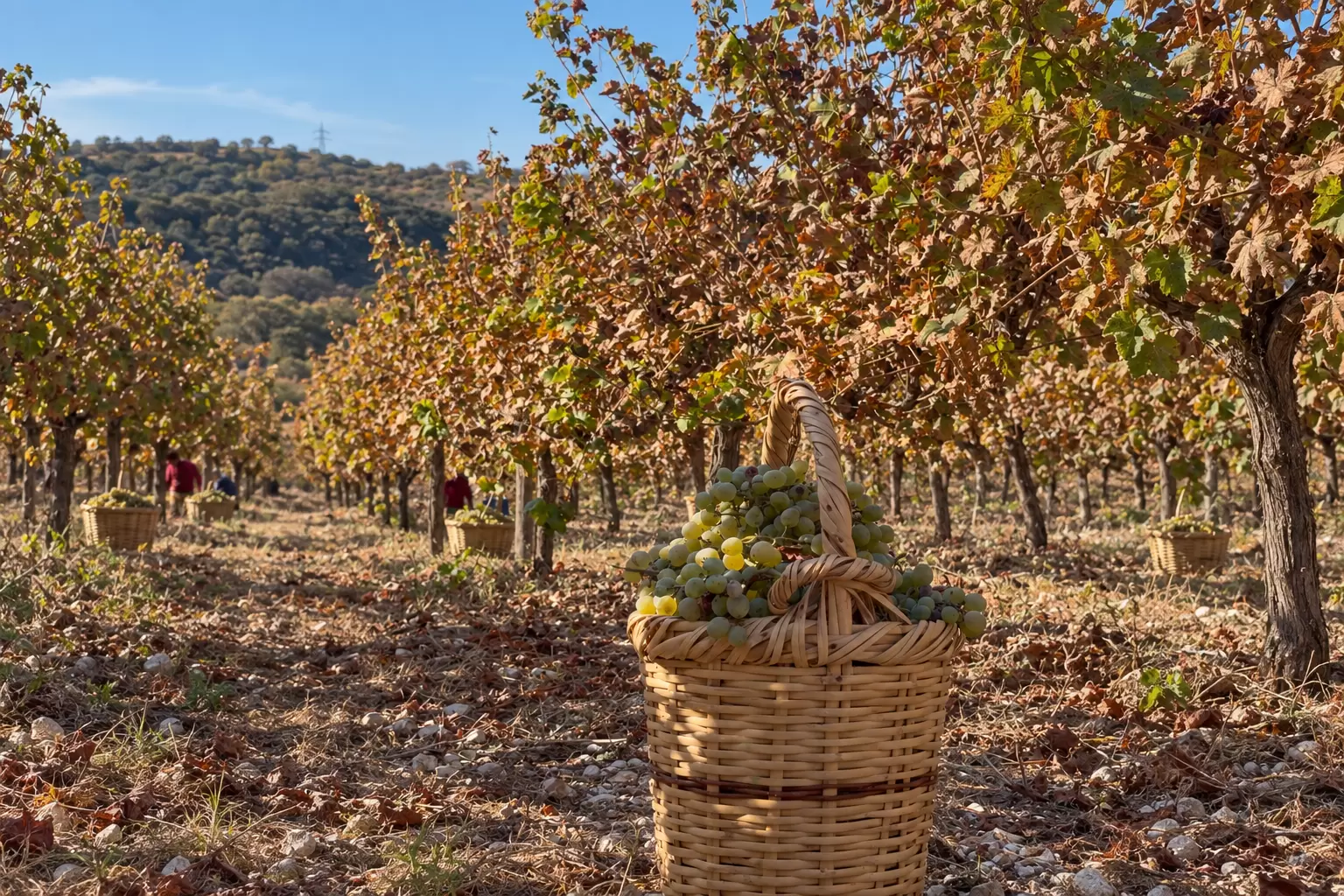
Cyprus’ indigenous Xynisteri grape has attracted international attention following a feature by ABC News Australia, which explored its potential to help Australian winegrowers respond to extreme heat, drought and increasing pressure on water supplies.
The report followed early plantings of the Cypriot white variety in South Australia’s Riverland and Barossa Valley. In the Riverland, approximately 800 Xynisteri vines reportedly survived temperatures reaching 49°C with little or no visible burning. Grower Yianni Koutouzis also reported using around 75% less water than he would for Shiraz or Chardonnay.
Controlled trials offer one possible explanation. Researchers found that Xynisteri developed a root structure three to four times larger than Shiraz, potentially improving its ability to reach moisture and maintain growth when irrigation is limited. Having evolved within the heat, low rainfall and limestone-rich soils of Cyprus, the variety may possess characteristics relevant to wine regions facing similar environmental pressures.
The findings remain preliminary. As a subsequent Cyprus Mail report explained, longer-term field trials are still needed to assess the variety’s yields, consistency and commercial performance across different vineyards and seasons.
Nevertheless, the research has brought valuable international attention to Cyprus’ indigenous grapes and the knowledge developed around their cultivation. A variety long associated with the island’s wine heritage is now contributing to a wider conversation about biodiversity, water efficiency and climate adaptation.
A Cypriot Variety with International Relevance
Xynisteri is one of Cyprus’ most important indigenous white grape varieties. Its ability to remain healthy through the island’s hot, dry summers first attracted the attention of Australian researcher Dr Alexander Copper while he was working during the wine harvest in Cyprus.
After spending several seasons on the island, he began investigating whether native grapes from the Eastern Mediterranean could be suited to Australia’s increasingly warm and water-limited wine regions. Xynisteri was introduced to Australia in 2018 and is now being cultivated on a small scale in South Australia.
The variety should not yet be regarded as a complete solution to the challenges confronting global viticulture. The controlled trials measured plant growth rather than fruit yields, while the reported reduction in water consumption reflects the experience of an individual vineyard rather than an industry-wide scientific assessment.
Even at this early stage, however, the research demonstrates the potential value of varieties that have adapted to demanding environments over generations. It also encourages greater international interest in Cyprus as a source of viticultural knowledge, with native grapes shaped by the island’s climate, soils and agricultural traditions.
This story is particularly relevant to the wine-producing region of Paphos, where vineyards, wineries and traditional villages remain closely connected to the landscape and local identity. Within this setting, Minthis offers several ways to experience Cypriot wine in the region where its character was formed.
Xynisteri and the Wine Experience at Minthis
Situated among the hills of Paphos, Minthis is surrounded by vineyards, traditional communities and wineries that continue to preserve and develop the island’s wine culture.
The resort’s own vineyards form part of this wider landscape, influenced by Mediterranean sunlight, mountain breezes and the mineral character of the soil. Viticulture at Minthis reflects this relationship between place, cultivation and craftsmanship. Among its wines, Minthis Xynisteri brings one of Cyprus’ most significant indigenous grape varieties into the contemporary resort experience.
Guests can discover Minthis Xynisteri at Amaracus, the Clubhouse and Bar-M. Whether accompanying seasonal Mediterranean cuisine or enjoyed during a relaxed evening overlooking the surrounding hills, the wine provides a direct connection between what is served and the landscape from which it originates.
This approach reflects a wider philosophy at Minthis. Wine is not presented simply as an accompaniment to dining, but as part of the destination’s cultural and agricultural identity. It becomes an accessible introduction to the climate, traditions and communities that have shaped the Paphos wine region.
Exploring Wine Beyond the Glass
The connection with wine at Minthis extends beyond the dining experience. Curated wine tastings introduce guests to indigenous grape varieties, regional producers and different expressions of Cypriot terroir.
During September and October, the grape harvest offers a closer encounter with the winemaking process. Guests can join the Minthis team in gathering grapes at their peak, gaining an appreciation of the timing, care and collective effort involved before the finished wine reaches the table.
The surrounding countryside creates further opportunities for exploration. Guests can follow regional wine routes by car or bicycle, travelling through vineyards and traditional villages while visiting local wineries along the way. Cycling through the vineyards and surrounding countryside provides a particularly engaging perspective, allowing the landscape, cultivated land and changing terrain to become part of the experience.
The Minthis concierge team can arrange itineraries around individual interests. These may include a dedicated winery tour, a cycling route through the vineyards or a broader day combining wine, local gastronomy and cultural sites.
After exploring the region, guests can return to the resort for time at the Minthis Spa, a walk through the protected landscape or an evening at one of its dining venues. Wine tourism therefore becomes part of a more complete stay, bringing together discovery, wellbeing, gastronomy and relaxation.
Celebrating Cyprus’ Wine Culture at Minthis
Wine also forms part of Minthis’ cultural programme. The Minthis Wine Festival brings together local producers and guests, creating an opportunity to discover Cypriot wineries, native grape varieties and the people contributing to the island’s evolving wine identity.
The cultural heritage of wine was also explored through a screening of the Cyprus episode of That’s Wine! at Minthis. The internationally recognised documentary series examines the relationship between people, land, time and winemaking across the Eastern Mediterranean and surrounding regions.
Presented in collaboration with SPM Family Office and producer Serge Polivar, the series has appeared at international film festivals, received a Telly Award and reached audiences through platforms including Apple TV and Amazon Prime Video.
Screening the Cyprus episode within the Paphos wine region gave its themes an immediate local context. Together, the documentary screening and Wine Festival demonstrate how Minthis approaches wine not only as a product, but as an expression of place.
Viticulture Within a Wider Sustainability Approach
The qualities attracting international interest to Xynisteri—adaptation, resilience and a potentially more efficient relationship with water—also connect naturally with the sustainability principles shaping Minthis.
The resort extends across five million square metres of protected Natura 2000 landscape, with only 3% of the wider site planned for development. Its low-density masterplan allows the majority of the land to remain natural, while its architecture responds to the landscape and draws inspiration from traditional Cypriot mountain villages.
Viticulture at Minthis forms part of a productive environment that also includes an organic garden, orchards and beehives. These elements connect cultivation with biodiversity, hospitality and regional identity, while introducing seasonality and local provenance into the dining experience.
Xynisteri adds another layer to this relationship. As a native variety that has adapted to Cyprus’ environmental conditions over generations, it represents the value of protecting agricultural biodiversity and preserving the knowledge associated with the land.
Sustainability at Minthis is therefore not limited to the management of buildings or natural resources. It also involves recognising the varieties, practices and traditions that belong to the region and finding meaningful ways to carry them forward.
A Global Story Rooted in Cyprus
It remains too early to know whether Xynisteri will become widely established in Australia. Its long-term yields, commercial viability and performance across different regions still require further study.
What the research has already achieved is significant: it has encouraged international researchers and growers to look towards Cyprus for knowledge that may be relevant to the future of wine. It has also given renewed visibility to an indigenous grape shaped by centuries of adaptation to the island’s climate.
At Minthis, that international story returns to the landscape where Xynisteri belongs. Here, the variety can be understood not only through research findings, but through the vineyard, the harvest, the dining table and the wider wine culture of Paphos.
The growing interest in Xynisteri demonstrates how local heritage can acquire new global relevance. At the same time, the experiences created around wine at Minthis ensure that this heritage remains connected to the people, traditions and landscape that continue to sustain it.
 Back To Top